When food cost climbs, the first reflexes go straight to the plate: smaller portions, cheaper produce, higher menu prices. Sometimes those are the right calls, but guests notice them. Part of the problem sits upstream of the kitchen, in purchases paid for at more than they should have cost, and every point saved there goes straight to your GP. Here are ten levers to reduce food costs in a hotel or restaurant without your guests seeing any difference.
Before you cut: know where the spend goes
Learning how to reduce food costs starts with a simple question: which products does your spend concentrate on? More often than not, a handful of lines account for a large share of it. Those are the ones to look at first, supplier by supplier and, in a group, site by site.
You also need a reliable starting figure. If you do not have one yet, our guide on how to calculate food cost sets out the formulas, and our article on actual vs theoretical food cost helps separate what belongs to purchasing from what belongs to the kitchen.
10 purchasing levers to reduce food costs
1. Start with the products that weigh most
Rank your purchases by value over twelve months. The lines at the top, often meat, fish and dairy, are where one point of price really counts. A modest saving on a product you buy every week is worth more than a generous discount on an occasional line.
2. Know the price you actually paid
Not the price list, not the quote: the invoice price, line by line, with its history. Every other lever depends on it. Without it, you are negotiating on impressions.
3. Compare per kilo, not per case
The same product comes as a block, a case, a tub or by weight. Until prices are brought back to the same unit, comparing suppliers is guesswork. And a change of pack size can hide an increase: the case drops from 5 kg to 4.5 kg, the case price stays the same.
4. Catch price drift before it settles in
The increases that cost most are rarely the most visible. They are small, repeated rises, each too small to justify a call to the supplier. Our article on price drift shows how they add up. Price alerts that compare every price paid with its history bring them to light from the very next invoice.
5. Hold suppliers to agreed prices
An agreed price is only worth something if it is the one invoiced. Checking every line against the agreed rate, and claiming the difference when it appears, is arguably the most profitable lever on this list, because it requires no new negotiation. See the supplier invoice errors you’re paying for.
6. Check deliveries on arrival
Actual weight against invoiced weight, quantities delivered against quantities ordered, quality against the order: whatever is not checked at the back door gets paid for. Matching order, delivery note and invoice brings the discrepancies to the surface without rechecking everything by hand.
7. Track credit notes and year-end rebates
A credit note promised over the phone and never issued, a year-end rebate worked out from memory: this money is owed to you, but only if someone tracks it. Rebate agreements deserve follow-up supplier by supplier, tier by tier, all year round.
8. Negotiate with a costed plan
Walking into a supplier meeting with price history, volumes bought and a target price per product changes the balance of power. You still need to know where the potential lies: which suppliers, which products, what order of magnitude. That is what a savings plan built on your purchasing history provides, rather than a negotiation run on gut feel.
9. Align every site on the best price
In a group, two hotels can pay different prices for the same product from the same supplier. Comparing sites side by side brings those gaps out, and the site with the best price becomes the benchmark for the others. To reduce food costs in a hotel, the same logic applies across outlets: restaurant, bar, room service, breakfast and banqueting.
10. Buy what you need
Order against actual stock rather than habit, buy in season, match quantities to the menu: every product that ends up in the bin was paid for in full. Our article on reducing food waste in restaurants explores the link between purchasing and waste, and a properly valued stocktake gives you the measure of it.
The ten levers at a glance
| Lever | What you look at | Impact on the plate |
|---|---|---|
| 1. Products that weigh most | Spend per product over twelve months | None |
| 2. Price actually paid | Line-by-line price history | None |
| 3. Price per kilo | Prices on the same unit | None |
| 4. Price drift | Trend of every price paid | None |
| 5. Agreed prices | Gap between agreed and invoiced price | None |
| 6. Receiving | Order, delivery note, invoice | None |
| 7. Credit notes and rebates | Amounts owed per supplier | None |
| 8. Negotiation plan | Potential per supplier and product | None |
| 9. Best group price | Gaps between sites | None |
| 10. Buying what you need | Stock, waste, seasonality | Sometimes, for the better |
What to avoid
- Cutting quality by default. A cheaper product that yields less or wastes more can cost more per portion.
- Switching supplier for an introductory price. The first month’s price says nothing about the sixth.
- Adding suppliers without tracking them. Every new supplier is one more price list to watch.
- Measuring savings once. An agreed price that is not checked every month can drift again without anyone noticing.
From analysis to verified savings
Every one of these levers relies on the same raw material: each line of each invoice, read, harmonised and compared. That is where Eqolux starts.
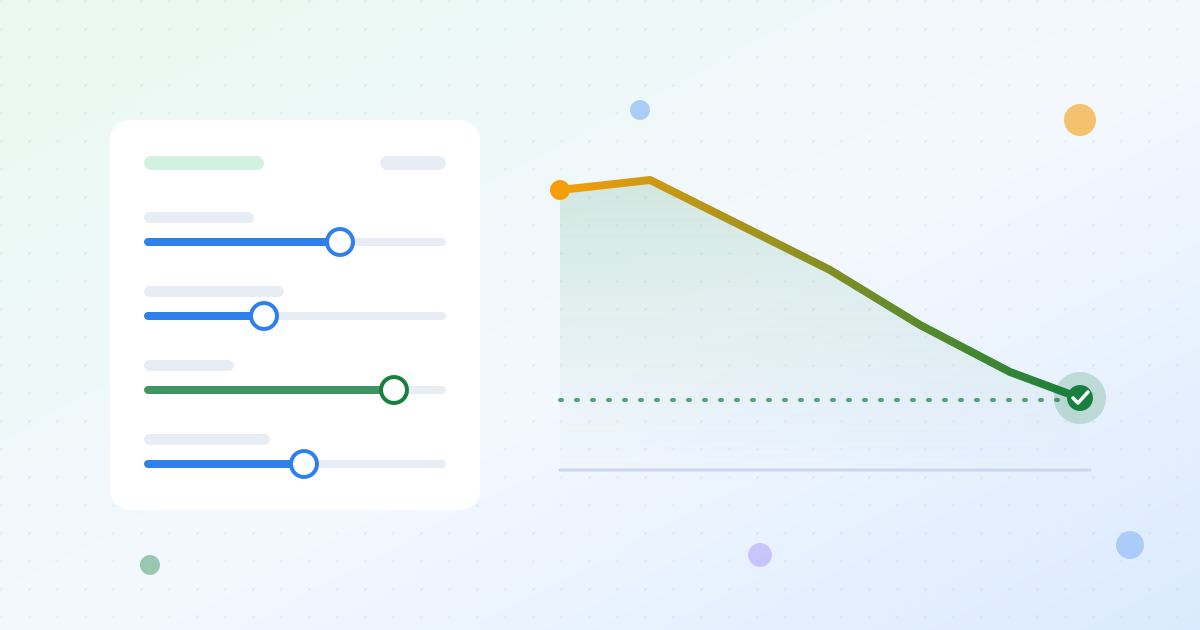
Eqolux cost control turns twelve months of purchasing history into a savings plan. Price increases are isolated, and three savings scenarios, prudent, realistic and optimistic, quantify the potential before negotiations begin. Suppliers and products are ranked by real overcost, and categories that are not negotiable can be excluded. For each product, you assign an owner, a negotiation status and a target price. Once a price is agreed, real invoices are compared with the target month after month: green confirms the saving, red tells you the supplier is drifting again.
Around it, supplier management compares agreed and invoiced prices line by line and tracks year-end rebates, while price alerts flag every drift as soon as it appears.
Key takeaways
- Part of your food cost is decided in purchasing, before the kitchen, and can be reduced without touching the plate.
- Start with the products that weigh most, at the price actually paid, brought back to a price per kilo.
- The most profitable levers often need no negotiation at all: enforcing agreed prices, checking deliveries, claiming credit notes and rebates.
- A negotiated saving only counts if it is verified, invoice after invoice.
Want to put a figure on the savings potential in your own purchases? Explore Eqolux cost control or book a demo on your own data.