Suppliers make mistakes. That is not an accusation — it is arithmetic. When thousands of lines are priced, discounted and invoiced by hand every month, some of them will be wrong.
The uncomfortable part is the direction of the errors. They rarely fall in your favour, and manual checking almost never catches them.
Four errors, one invoice
Here is a single invoice. Nothing about it looks alarming at a glance. Yet four of its lines are wrong — each in a way that costs you money.
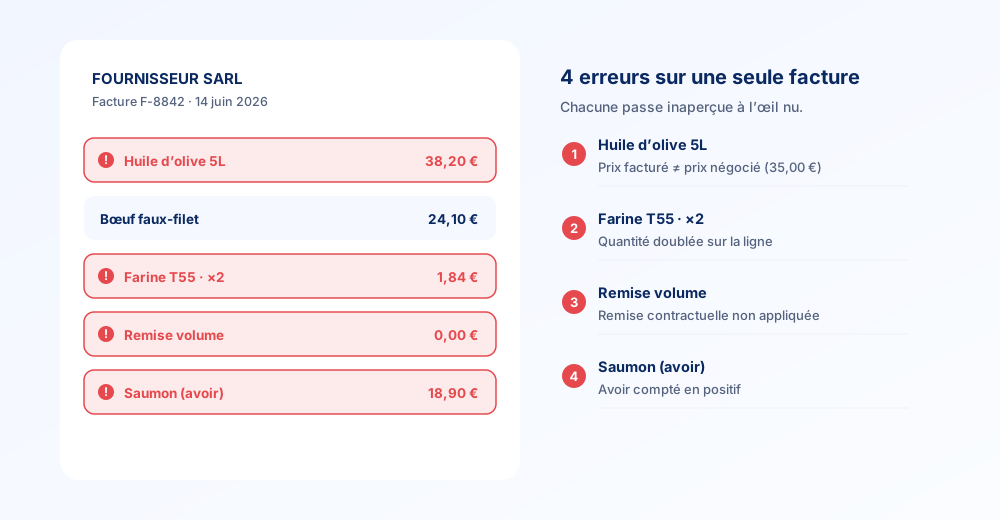
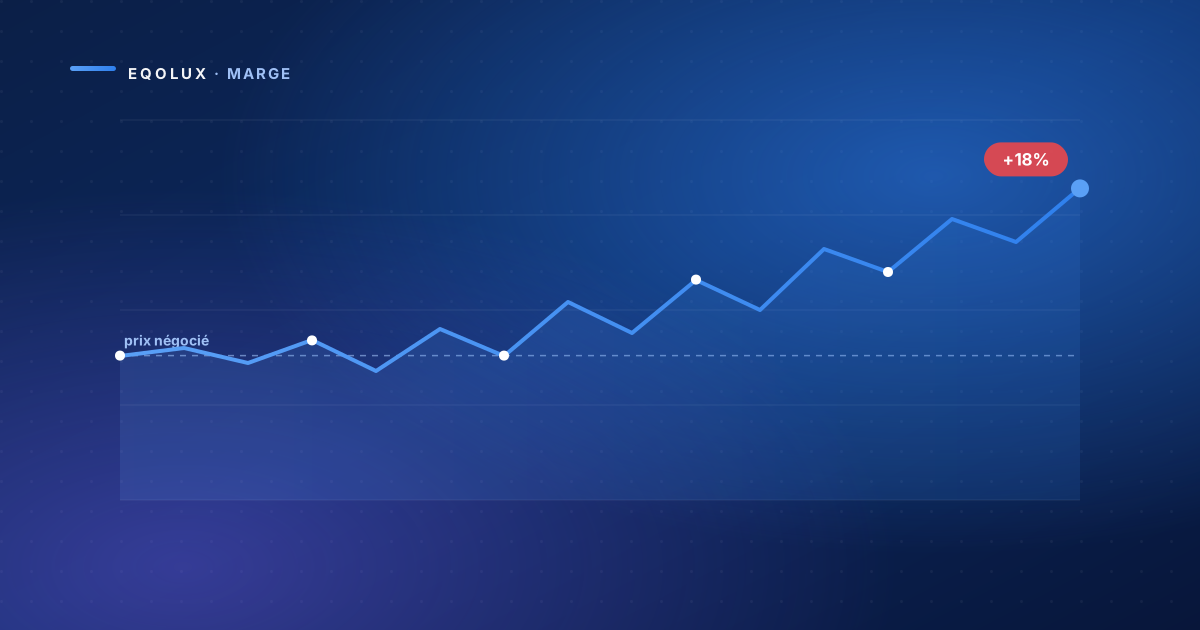
- The price doesn’t match what you negotiated. A contracted €35 line is billed at €38.20. Nobody re-reads the contract at payment time, so it goes through.
- A contractual discount is missing. The volume rebate you earned simply isn’t applied.
- A duplicate charge. The same product, the same week, billed twice — often because a delivery note was scanned across two pages.
- A credit note counted the wrong way. A return (avoir) that should reduce the total is added to it instead.
Individually, each one is small enough to wave through. That is exactly why they survive.
Small errors, cumulative cost
The problem isn’t the single €3.20 line. It’s the same €3.20 line, on the same staple, on every invoice, for a year — multiplied by every product, every supplier and every outlet.
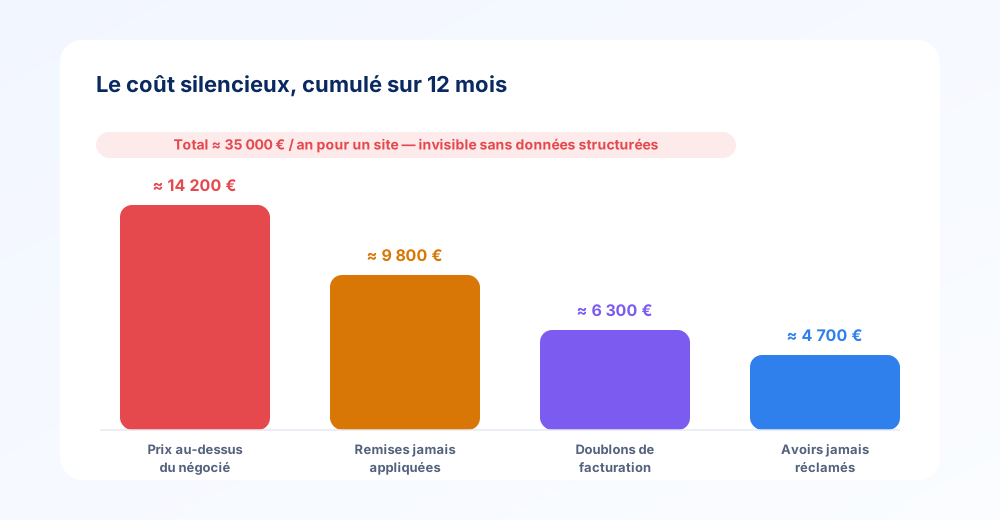
Prices above the agreed rate, discounts never applied, duplicate billing and unclaimed credit notes add up to real money — money that leaves quietly because no single line ever looked worth an argument.
Why manual checks miss them
Catching these by eye would mean, for every line: remembering the negotiated price, knowing which discount applies, recognising a duplicate across documents, and reading credit notes with the right sign. Nobody does that reliably at scale — not because they’re careless, but because it’s not a human-shaped task.
A machine, on the other hand, is very good at it:
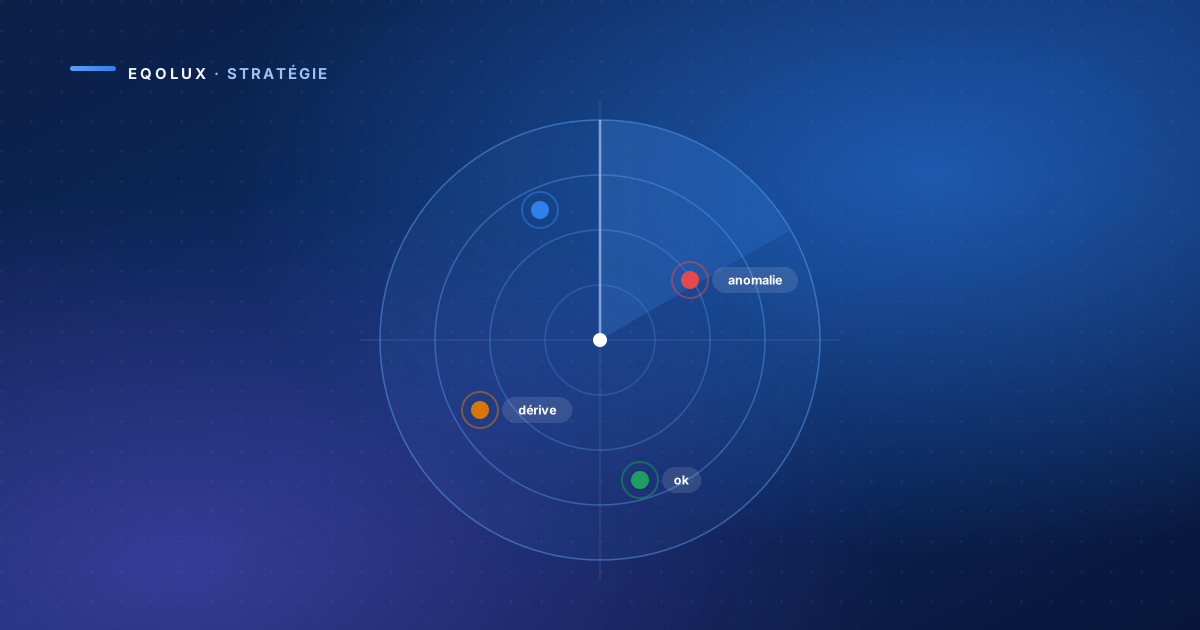
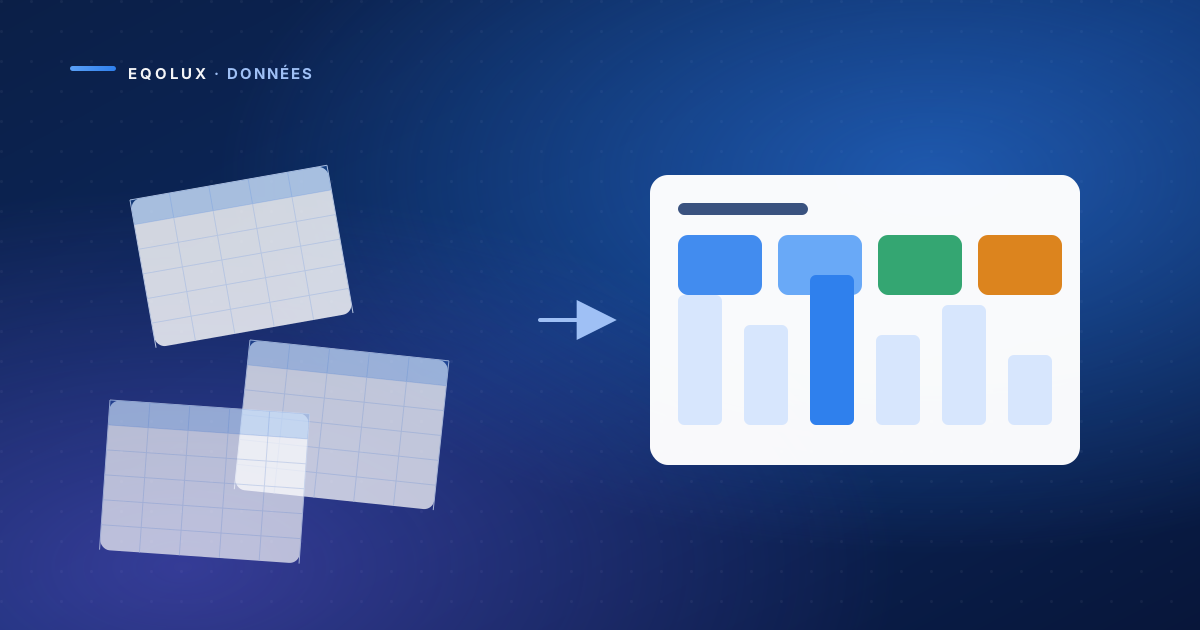
- compare every imported line to the fixed price you negotiated, and flag the drift;
- detect duplicate documents and lines as they arrive;
- apply the correct sign to credit notes so totals stay honest;
- raise the discrepancy before the invoice is paid, with the context to act on it.
You don’t need to distrust your suppliers. You need a system that checks the maths so the relationship can stay about food, not disputes.
Want to know what your invoices are hiding? Book a demo and we’ll run the check on your own data.