Significant price increases get handled. A supplier who doubles a price receives a call the same day. The increases that genuinely damage margins are the ones too small to justify a reaction — applied repeatedly, over months, across your highest-volume products. This pattern is known as price drift, and in food and beverage purchasing it is the norm, not the exception.
What drift looks like in practice
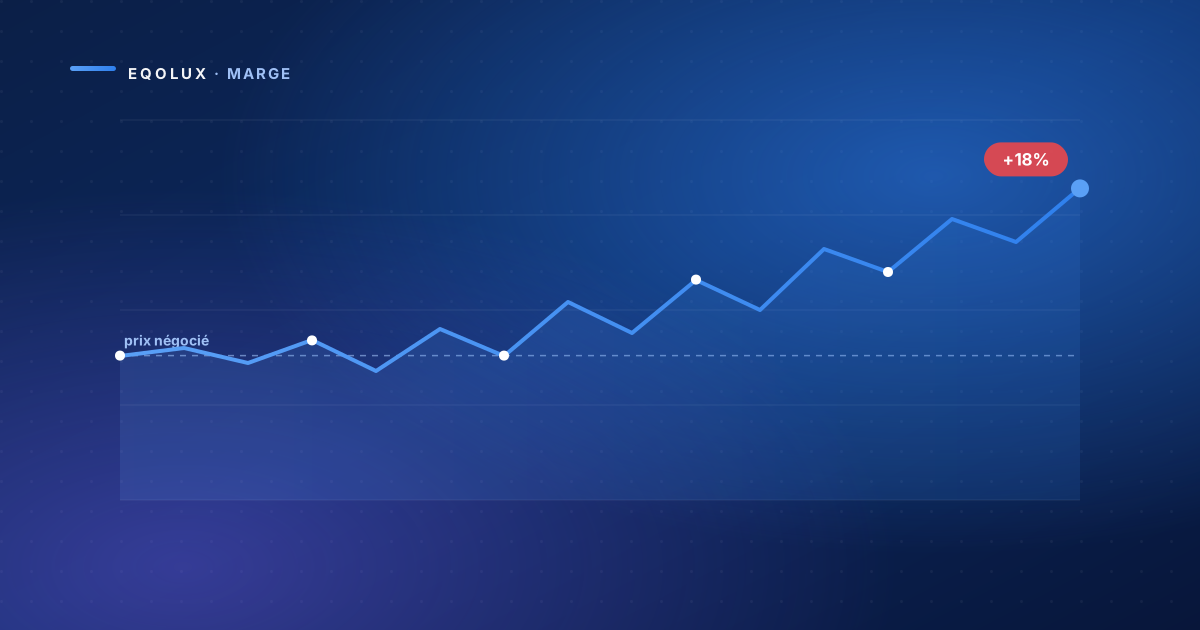
Take a single staple ingredient. Month to month, the unit price barely moves — a small step up, occasionally a step back. Nothing crosses the threshold that would prompt a query to the supplier.
Viewed over twelve months, the picture changes: the price now sits 15–20% above the rate you negotiated, on a product you purchase every week. The total increase was always there — it simply never arrived in a single, visible step.
Why purchasing teams miss it
Three structural factors keep drift invisible:
- Attention is event-driven. Teams notice spikes, shortages and sudden changes. A slow, monotonic creep across dozens of invoices is exactly the pattern human review is worst at detecting.
- The data is fragmented. When purchasing history lives in PDFs and email threads, no two months are ever visible on the same screen — so trends cannot be seen at all.
- The volume is unmanageable. Multiply hundreds of SKUs by several suppliers and sites, and systematic manual price review is not a realistic control.
Four capabilities that surface drift early
Once purchasing data is structured, drift detection is straightforward to automate:
- A negotiated baseline per product, so “normal” is a recorded number rather than someone’s recollection.
- Trend detection that flags any price moving away from its baseline — however gradually.
- Price-spike and fixed-price-gap views that rank the largest deviations first, so attention goes where the money is.
- Alerts with context, turning a detected drift into a supplier conversation this week instead of a year-end discovery.
Key takeaways
- Price drift erodes more margin than headline increases, because it goes unchallenged.
- Manual review cannot catch it: the pattern is too gradual and the data too fragmented.
- With structured data and a negotiated baseline per product, detection is automatic — and margin protection becomes a routine, not a project.
Want to see where your prices have drifted? Request a demo on your own purchasing history.