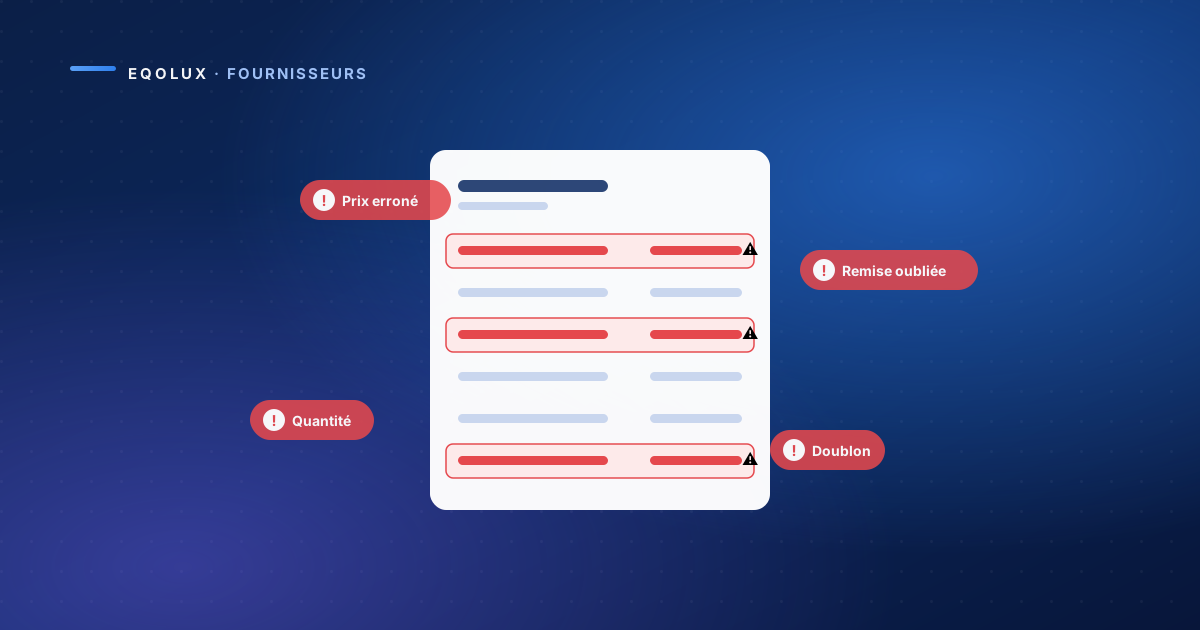
Supplier billing errors are not a sign of bad faith — they are a statistical certainty. When thousands of lines are priced, discounted and invoiced every month, a percentage will be wrong. Two facts make this a margin issue rather than an accounting footnote: errors rarely fall in the buyer’s favour, and manual review rarely catches them.
The four most common billing errors
Line-level analysis of hospitality invoices surfaces the same four patterns repeatedly:
- Invoiced price above the negotiated rate. A line contracted at €35 is billed at €38.20. Nobody re-reads the contract at payment time, so it clears.
- Contractual discounts not applied. Volume rebates and negotiated terms are simply absent from the invoice.
- Duplicate charges. The same product, the same week, billed twice — frequently because a delivery note was processed across two pages or two documents.
- Credit notes applied with the wrong sign. A return that should reduce the total is added to it instead.
Each error is individually small enough to wave through. That is precisely why they persist.
The compounding cost
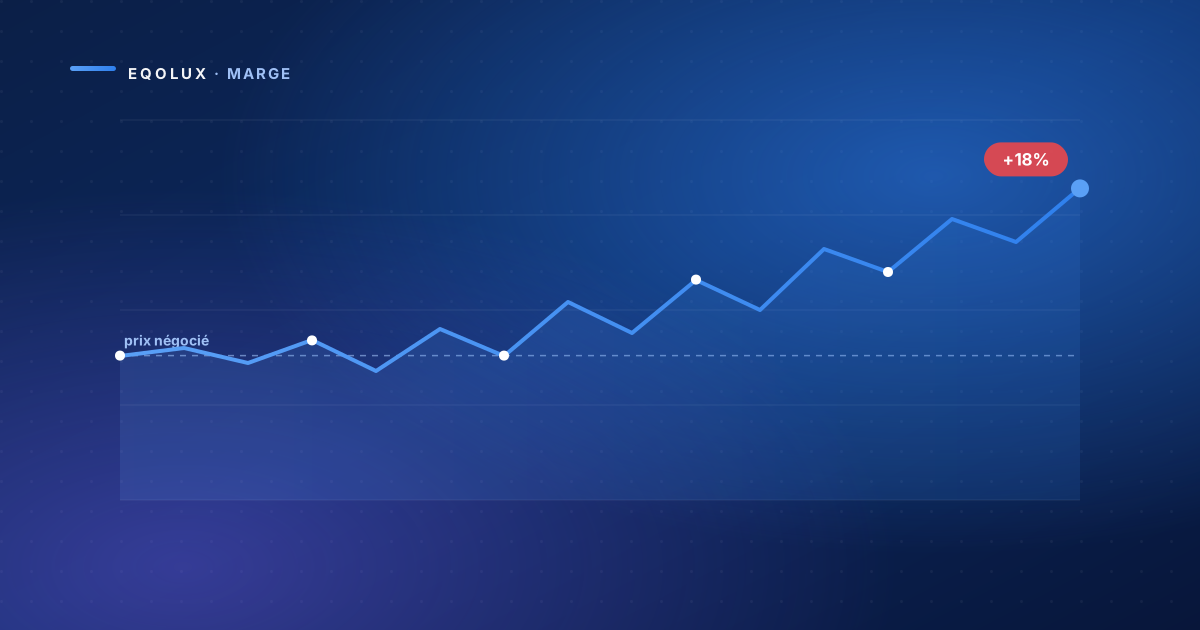
The issue is not one €3.20 discrepancy. It is the same discrepancy on the same staple, on every invoice, for a year — multiplied across every product, supplier and site. For a multi-site group, unnoticed billing errors typically add up to a meaningful percentage of annual purchasing spend: money that leaves quietly because no single line ever looked worth a dispute.
Why manual controls fall short
Catching these errors by eye would require, for every line: recalling the negotiated price, knowing which discount applies, recognising duplicates across documents, and verifying the sign on every credit note. No team does that reliably at scale — not through carelessness, but because it is not a task suited to human review.
It is, however, exactly the task automated controls are built for:
- compare every imported line against the negotiated price on record, and flag deviations;
- detect duplicate documents and lines at import time;
- enforce the correct treatment of credit notes, so totals stay accurate;
- raise each discrepancy before payment, with the context needed to resolve it.
Key takeaways
- Supplier billing errors are systematic, asymmetric and individually too small to trigger manual review.
- The cumulative cost across products, suppliers and sites is material.
- Line-level automated checking moves the control point before payment — where recovery is a correction, not a negotiation.
Want to know what your invoices are hiding? Book a demo and we will run the check on your own data.