In hospitality and food service, purchasing is often the largest cost after payroll. Yet in many organizations, purchasing data remains scattered across multiple ERPs, accounting systems, PDF invoices, Excel spreadsheets and supplier portals.
As a result, teams spend more time searching for information than making decisions.
Meanwhile, price increases go unnoticed, billing discrepancies accumulate, margins shrink and reporting absorbs hours of work every month.
The question is no longer how to produce more data, but how to make intelligent use of the data that already exists.
Why traditional tools are reaching their limits
ERPs, accounting software and purchasing management tools are essential for recording operations.
However, they were rarely designed to address the current challenges facing hotel groups:
- centralizing data from multiple properties;
- automatically comparing supplier prices;
- detecting price increases;
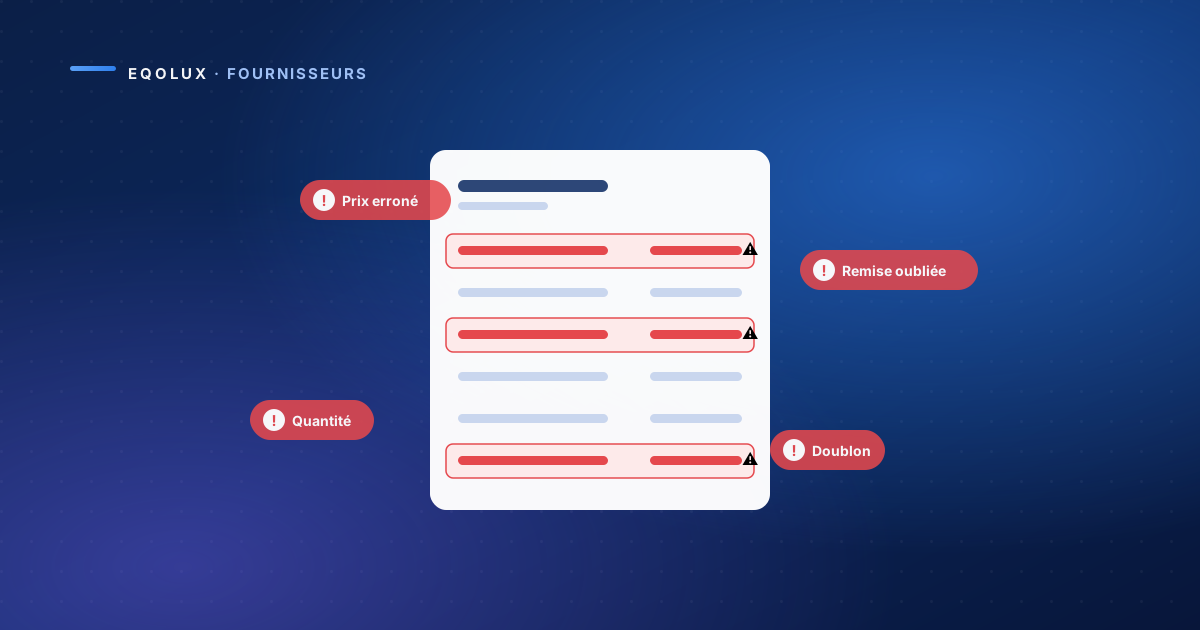
- controlling billing discrepancies;
- tracking food costs in real time;
- automatically measuring the carbon footprint of purchases.
Teams compensate with Excel exports, manual consolidation and time-consuming reporting. This approach consumes significant resources while leaving little time to analyze and act.
Moving from purchasing management to true performance steering
Managing purchasing is no longer only about negotiating the best prices.
It now means having a global view that helps teams understand:
- which suppliers are increasing their prices;
- which spending categories weigh most heavily on margins;
- where the best savings opportunities are;
- which properties are performing best;
- what the real environmental impact of purchases is.
When this information is available in real time, decisions become faster, more reliable and more profitable.
Turning every invoice into strategic data
Every invoice contains valuable information: products, quantities, prices, suppliers, properties, contracts, pricing conditions…
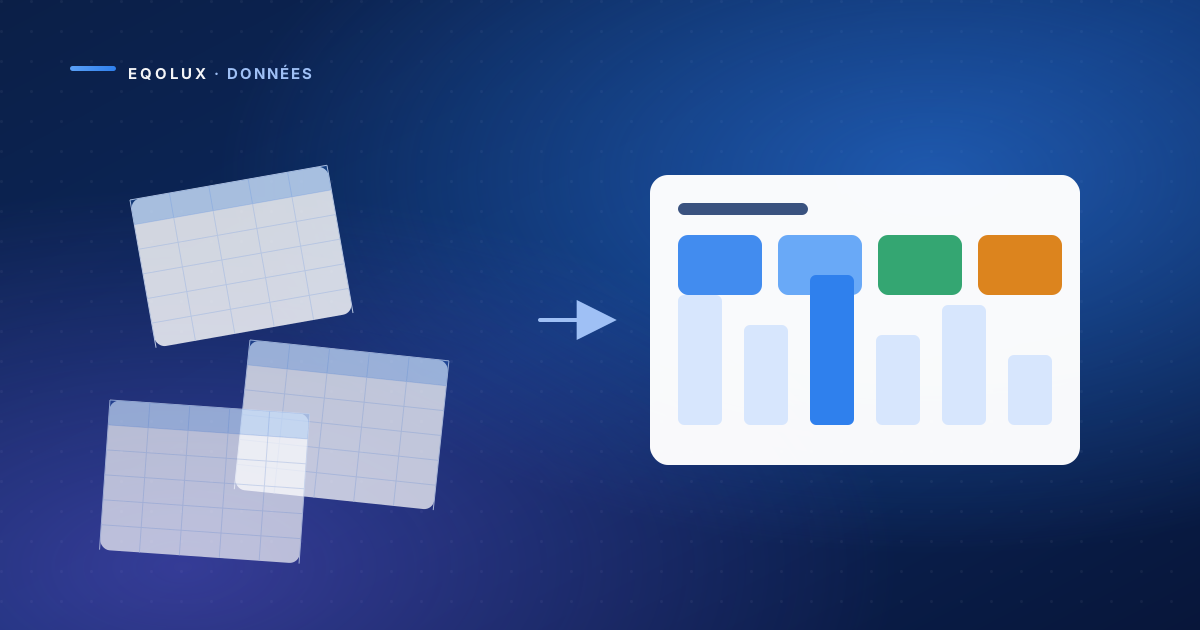
Thanks to artificial intelligence, this data can now be extracted, cleaned, normalized and enriched automatically, regardless of the software used by the company.
All purchasing data is then brought together in a single platform, providing a consolidated view of total spend.
This approach makes it possible to:
- automatically detect billing anomalies;
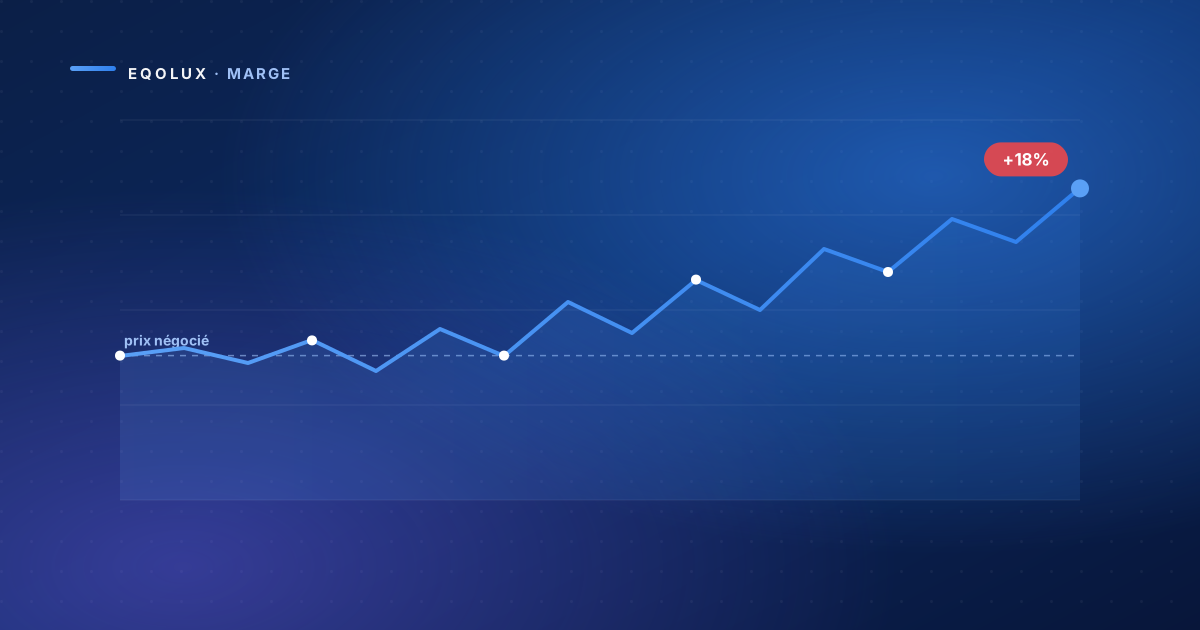
- identify price increases as soon as they appear;
- compare suppliers on equivalent products;
- track food costs daily;
- produce financial reporting instantly;
- automatically calculate CO₂ emissions linked to purchases.
More efficient purchasing, and more sustainable purchasing
Economic performance and environmental performance are no longer separate topics.
The same data that helps optimize costs also makes it possible to measure carbon footprint, improve supplier traceability and guide decisions toward more responsible purchasing.
Data becomes a true decision-making tool, shared across finance, purchasing, operations and CSR teams.
Anticipate instead of observing after the fact
In many organizations, discrepancies are identified several weeks after purchases are made, once reports have been consolidated.
At that stage, it is often too late to act.
By contrast, real-time visibility makes it possible to immediately detect a price increase, a billing anomaly or food cost drift, so teams can take action before margins are affected.
This ability to anticipate becomes a major competitive advantage, especially in sectors where costs move quickly, such as hospitality and food service.
The future of purchasing is built on data
The highest-performing companies will not be those that produce more reports.
They will be those that can automatically transform their purchasing data into actionable information to steer their business.
By centralizing all financial, supplier and purchasing data in a single platform, organizations can simultaneously improve profitability, cost control, supplier quality and environmental impact management.
This new generation of tools will help hotel groups and food service operators move from administrative purchasing management to true strategic performance steering.
Want to discover how to centralize your purchasing data, protect your margins and automate reporting? Book a personalized demo with the Eqolux team.