The dangerous price increases are not the ones that make you flinch. A supplier who doubles a price gets a phone call the same day. The increases that actually hurt are the ones too small to bother reacting to — repeated, quietly, for a year.
That is price drift, and it is where margin goes to die.
The 2% that becomes 18%
Take one staple — say, olive oil. Month to month, the unit price barely moves. A little up here, a little back there. Nothing that would ever trigger a “why has this gone up?” email.
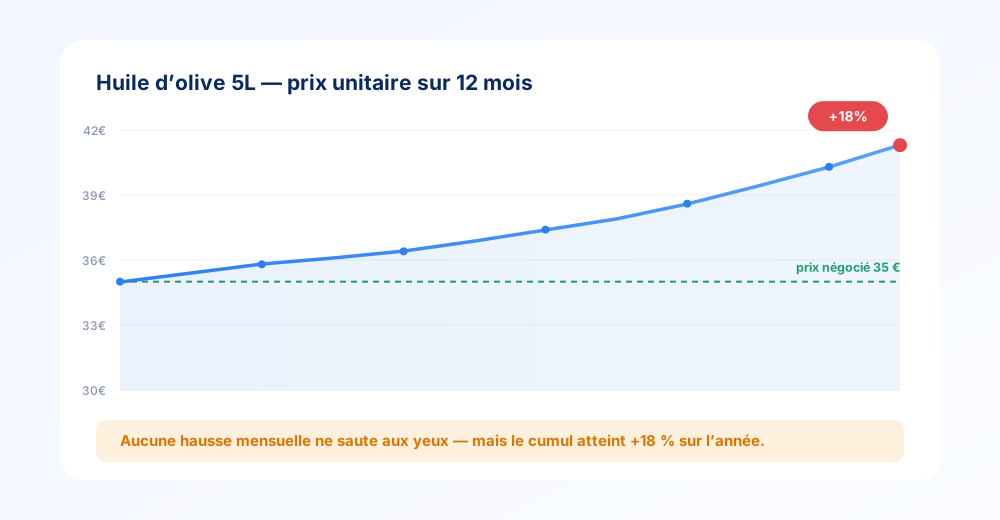
Zoom out to twelve months and the picture changes completely. The line that never jumped has quietly climbed 18% above the price you negotiated — on a product you buy every single week. The increase was always there. It just never arrived all at once, so nobody caught it.
Why it stays invisible
Price drift survives because human attention is tuned to events, not trends. We notice the spike, the shortage, the sudden change. A slow, monotonic creep across dozens of invoices is precisely the pattern we are worst at spotting — especially when purchasing data lives in PDFs and emails, where no two months are ever on the same screen.
Multiply that by hundreds of products and a handful of suppliers, and drift isn’t an edge case. It’s the default.
Seeing it early
The good news: drift is trivial to detect once the data is structured. You don’t need to watch every product — you need the data to watch them for you.
- A negotiated baseline per product, so “normal” is a number, not a memory.
- Trend detection that flags a line creeping away from that baseline, however gently.
- Price-spike and fixed-price-gap views that surface the worst offenders first.
- Alerts in context, so a drift becomes a conversation with the supplier, not a year-end surprise.
Protecting margin isn’t about hard-nosed negotiation on the big items. It’s about refusing to lose, quietly, on the small ones.
Want to see where your prices have drifted? Request a demo on your own purchasing history.