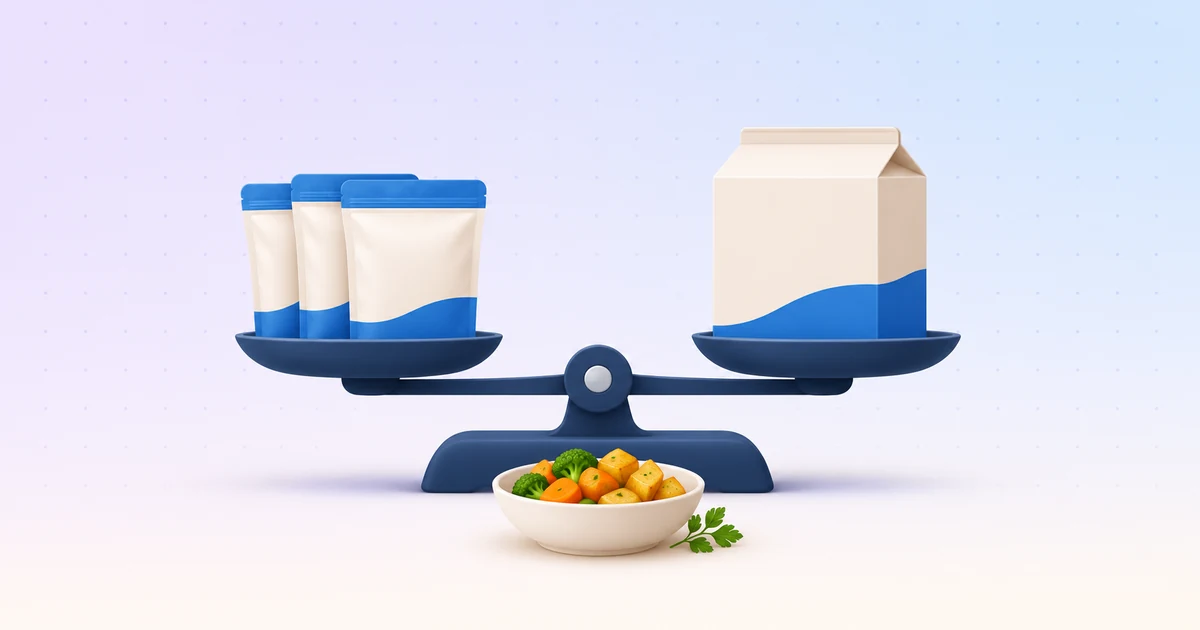
Two suppliers offer a similar product. One charges 36 per case; the other charges 34. The cheaper option looks obvious until you check the contents: the cases contain different quantities.
For hotels and restaurants, comparing supplier prices involves two calculations: the price in a common unit, then, where preparation makes a difference, the cost of the quantity you can actually use in the kitchen. This method helps you avoid letting a change in pack size distort a purchasing decision.
Check that the products meet the same need
Before calculating, check the product: ingredients, required quality, size, fresh or frozen state, preparation and intended use. A whole product and a trimmed product may meet the same need, but their usable costs require a separate comparison.
Use prices valid for the same period and location, expressed in one currency. Keep the tax basis consistent, using tax-exclusive amounts and the same discount rules. Separate quoted prices from invoiced prices: our supplier price list guide explains how to organise these references.
Convert case prices into cost per kilo
For an invoice line charged by the case:
Total quantity = number of cases × units per case × quantity per unit.
Cost per kilo = line amount after discount ÷ total quantity in kilos.
Read the invoicing unit before applying the formula. If the line is already charged in kilos, do not multiply it by the case contents again.
This fictional example uses tax-exclusive amounts in one currency, with no additional charges:
| Offer | Contents of one case | Case price | Total quantity | Cost per kilo |
|---|---|---|---|---|
| A | 6 bags of 750 g | 36.00 | 4.5 kg | 8.00 |
| B | 4 bags of 1 kg | 34.00 | 4 kg | 8.50 |
Offer B costs less per case but more per kilo. On this basis alone, A is cheaper. Delivery terms or preparation yield can still change the ranking.
For liquids, apply the same reasoning per litre. Do not convert litres to kilos without knowing the density of the particular product.
Choose the weight that matches your use
GS1 distinguishes net weight, which excludes packaging, from drained weight, measured after removing the liquid as stated on the label. These definitions appear in its product data guideline.
If your recipe uses only the drained contents, compare the cost of that quantity. If it also uses the liquid, record that choice in your reference. Do not include packaging weight in the quantity of ingredient being compared.
Calculate the cost per usable kilo
The USDA Food Buying Guide distinguishes food as purchased from its edible portion and explains the conversion using yield. This distinction is useful when comparing different preparations.
Usable quantity = purchased quantity × yield.
Cost per usable kilo = purchase cost ÷ usable quantity.
In this second fictional example, the yields are assumptions, not industry benchmarks.
| Product | Purchased quantity | Purchase cost | Yield | Usable quantity | Cost per usable kilo |
|---|---|---|---|---|---|
| A | 10 kg | 70.00 | 80% | 8 kg | 8.75 |
| B | 10 kg | 80.00 | 95% | 9.5 kg | 8.42 |
B costs more to buy but less per usable kilo in this example. Verify the result with a kitchen trial, comparing both products at the same preparation stage. Do not count the same loss twice: draining, trimming and cooking must refer to clearly identified steps. An unknown yield needs measuring; it does not automatically mean 100%.
Then use the appropriate quantity in your recipe costing sheet to support your food cost calculation.
Check the cost of the complete order
A unit price alone cannot determine the best offer. Review delivery charges, minimum orders, free-delivery thresholds, storage life after opening and preparation labour. A large pack may be poorly suited to your consumption.
Compare baskets you can actually order. Also separate immediate discounts from conditional year-end rebates: an expected rebate has not yet been earned.
Keep an auditable comparison with Eqolux
For each comparison, retain the supplier reference, source document, date, invoicing unit, pack size and conversion rule. Add the kitchen trial date when a yield is involved.
Eqolux invoice extraction captures product lines, quantities and prices. The purchase catalogue organises references and their price history; unit harmonisation supports comparisons. Preparation yields still need to be established with your team.
You then have a comparable price, a documented usable cost and the evidence needed for a productive conversation with your suppliers.