Since 1 September 2026, every business established in France and subject to VAT must be able to receive electronic invoices. For a group running hotels or restaurants in France — including groups headquartered in the UK or Switzerland — the French e-invoicing mandate lands first on the purchasing side: it is supplier invoices that change shape. The real question is what the new format actually fixes, and what it leaves untouched.
This article reflects the situation on 3 November 2026, based on the official sources linked below (in French). It is general information, not legal or tax advice.
E-invoicing in France 2026: where the reform stands
The calendar
| Date | Businesses concerned | Obligation |
|---|---|---|
| 1 September 2026 | All, whatever their size | Receive e-invoices through an approved platform |
| 1 September 2026 | Large companies and mid-sized companies (ETI) | Issue invoices electronically, send e-reporting data |
| 1 September 2027 at the latest | SMEs, small and micro-businesses | Issue invoices electronically, send e-reporting data |
One detail matters for groups: company size is assessed per legal unit, that is per SIREN number. Where each hotel or restaurant sits in its own company, each company follows its own issuing date. All of them, however, must already be able to receive.
The French tax authority’s start-up guide states that penalties will not be applied during the start-up phase to businesses that run into difficulties but are on a serious path to compliance. It is equally clear that this is neither a postponement nor a suspension of the obligation.
Approved platforms (plateformes agréées)
Issuing, transmitting and receiving invoices must go through an approved e-invoicing platform — a plateforme agréée (PA), formerly called a PDP — registered by the French tax authority. The official list is published on impots.gouv.fr. The choice is free: a business can use several platforms, switch at any time, and its platform does not have to be its suppliers’ platform. Invoicing or accounting software can act as the go-between, provided it is connected to at least one approved platform.
The tax authority is explicit on one point: a plain PDF sent by email is not an e-invoice under the reform.
Formats: Factur-X, UBL, CII
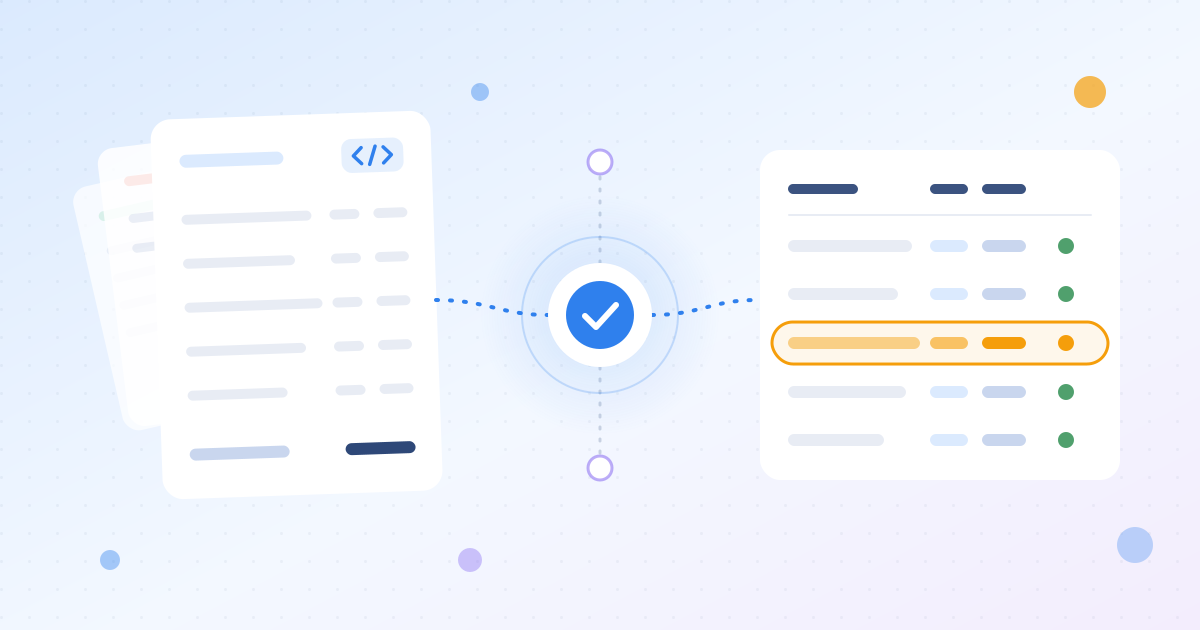
Approved platforms work from a common set of formats: two structured formats, UBL and CII, and one hybrid format, Factur-X, which pairs a readable PDF with an XML data file. A supplier cannot impose its format on a customer: this common base, shared by every approved platform, is what makes the exchange work.
Four new mandatory invoice details
Since 1 September 2026, four details have been added to the usual mandatory ones: the customer’s SIREN number; the category of the transaction (supply of goods, supply of services, or both); the option to account for VAT on an invoice (debit) basis, where chosen; and the delivery address when it differs from the billing address. For a group invoiced at head office and delivered site by site, that last detail helps attach each invoice to the right property.
E-reporting
Some transactions that fall outside B2B e-invoicing are reported to the tax authority as data instead: sales to consumers, certain transactions with foreign customers or suppliers and, in some cases, payment data. The calendar is the same as for issuing. On the sales side, for a restaurant as for a hotel, a bill paid by a private guest falls under e-reporting, while an invoice to a business customer established in France must be an e-invoice, each on your own company’s timetable — the tax authority covers the case of restaurant bills in detail.
What the French e-invoicing mandate changes for hospitality purchasing
A mixed flow until at least September 2027
Suppliers that are large or mid-sized companies — distribution, energy, telecoms — have been required to issue e-invoices since 1 September 2026. SMEs, small and micro-businesses have until 1 September 2027 and can keep sending PDFs or paper until then. Invoices from suppliers established outside France arrive as before. Meanwhile, the same invoice may also reach you through two channels: the official guide recommends choosing one reference invoice and marking the other copies as duplicates, so nothing is paid twice.
Structured lines, in each supplier’s own vocabulary
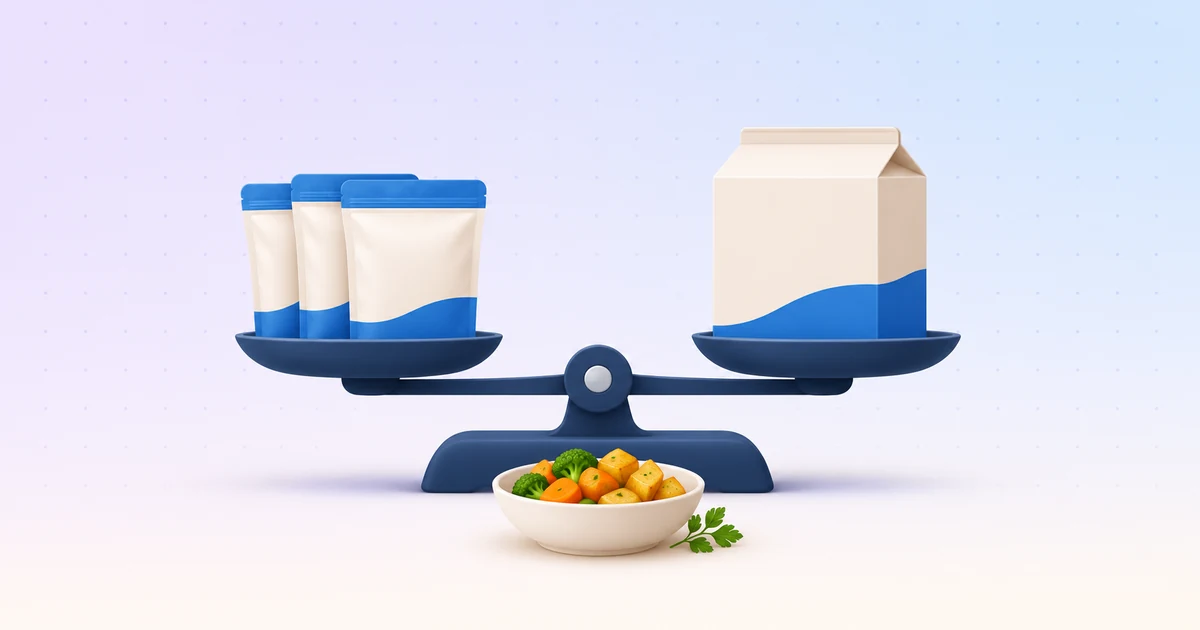
With the reform’s formats, invoice lines — description, quantity, unit price — can arrive as data rather than as an image. That is real progress. But the format standardises the envelope, not the content: the wholesaler writes “CREME UHT 35% 6X1L” per case, the dairy supplier “Crème liquide 35 % MG 1 L” per bottle. To compare their prices per litre, you still have to recognise that it is the same product and convert the units.
Delivery notes and credit notes still need matching
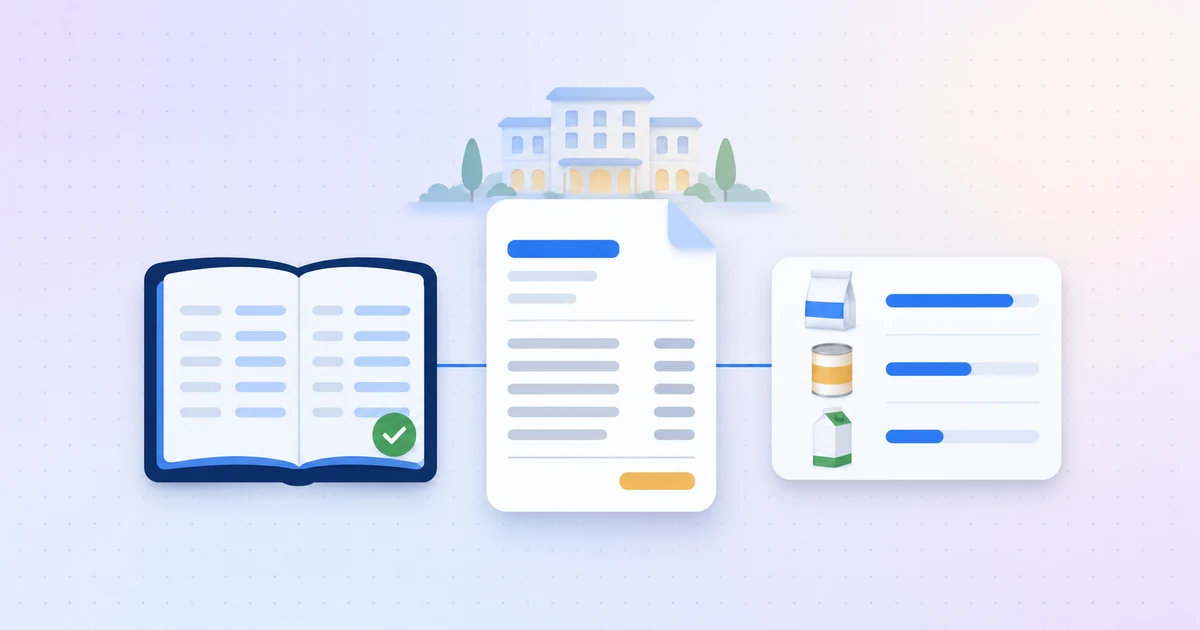
The official FAQ is explicit: documents other than invoices are outside the scheme. The delivery note, signed at the loading bay or in the kitchen, keeps arriving as it always has — and it is the document that says what was actually delivered. As for credit notes — a product refused, missing, or a discount granted — they are only useful to a buyer once attached to the line they correct. No format does that matching for you.
A negotiated price is not checked by the format
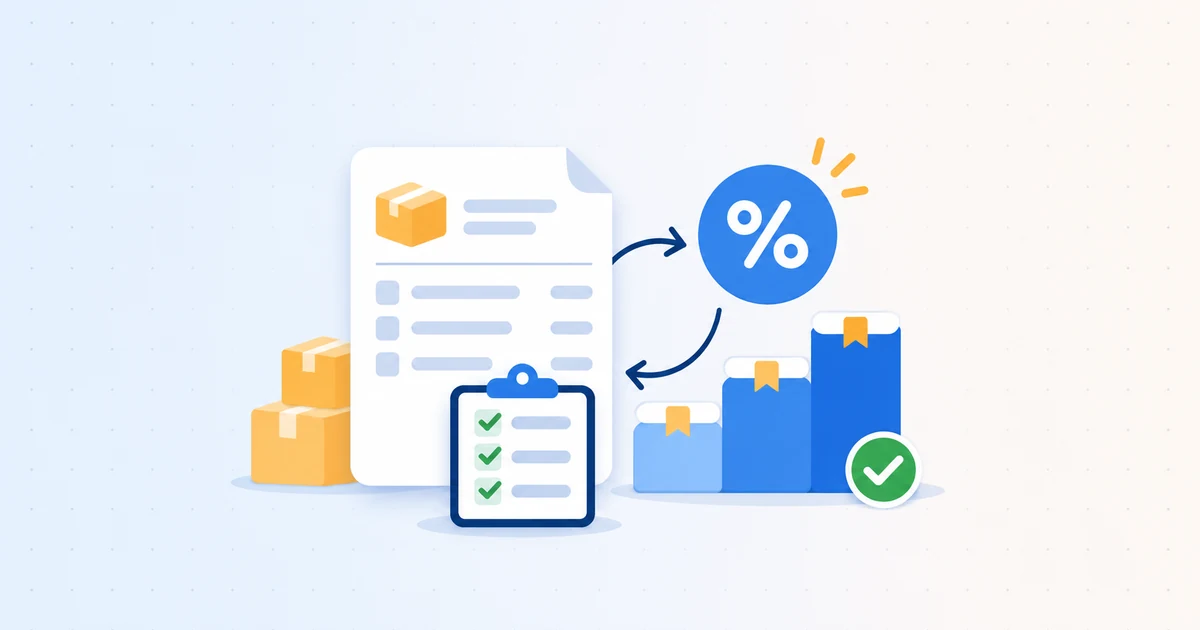
A platform rejects an invoice for technical reasons: a non-compliant format, a missing mandatory field. An invoice priced above your negotiated rate goes straight through. The invoice life cycle does include a “refused” status for commercial reasons, such as a price or quantity error. But someone has to spot the gap before the invoice is approved — which means knowing the negotiated price, product by product.
Comparing over time and across sites
An approved platform delivers invoices one at a time, company by company. The view a buyer needs — the same product, across twelve properties, over twelve months — is built somewhere else.
Where Eqolux fits
Eqolux is not an approved platform and does not replace one. Eqolux analyses the content of your invoices, credit notes and delivery notes, whatever their format, whether they arrive by email, drop folder, API or from the tools that already receive them — for example Yooz, synced every night with read-only access. Structured invoices make that data cleaner; the purchasing work starts afterwards:
- line-by-line extraction of every document, with each line kept linked to its source PDF;
- a purchase catalogue shared by every site, with clean labels and harmonised units;
- price alerts that compare every price paid with its history and your negotiated prices, line by line.
Checklist for finance and purchasing leads
- Check every SIREN in the group: has each company designated its receiving platform, and do you keep a record of it?
- Sort your suppliers by calendar: those already issuing e-invoices, those switching by September 2027, those established abroad.
- Update the billing details your suppliers hold: the right company, its SIREN, the delivery address of each property.
- Set a rule for duplicates: one reference invoice, the other copies marked as such.
- Decide where delivery notes are captured and how they are matched with invoices and credit notes.
- Record your negotiated prices where they can be compared automatically with invoiced prices, before approval.
- Adopt one product reference shared by all sites, so prices compare per kilo or per litre from one property to the next.
Key takeaways
- Since 1 September 2026, every company in the group must be able to receive e-invoices; the issuing date follows the size of each SIREN.
- The format structures the invoice. It does not standardise labels or units, and it does not check the negotiated price.
- Delivery notes and credit notes still need matching, and the flow will stay mixed until at least September 2027.
- The reform makes the data cleaner. Turning it into purchasing control is a separate job.
Want to see what your supplier invoices really contain, electronic or not? Book a demo on your own documents.