
Ask any operator where their procurement budget goes and they will point to the invoices. The larger, less visible cost sits elsewhere: the hours skilled staff spend converting supplier documents into usable data. That cost never appears on the P&L — but it shapes what your purchasing function is actually able to deliver.
Where the hours actually go
In a typical multi-site operation, the same cycle repeats every week:
- Data entry, twice. Delivery notes and invoices are retyped — once for payment, once for tracking — often into two different systems.
- Manual price checks. Current prices are compared against last month’s from memory, or from a spreadsheet that is already out of date.
- Discrepancy follow-ups. Each gap identified means an email to the supplier and several days of waiting.
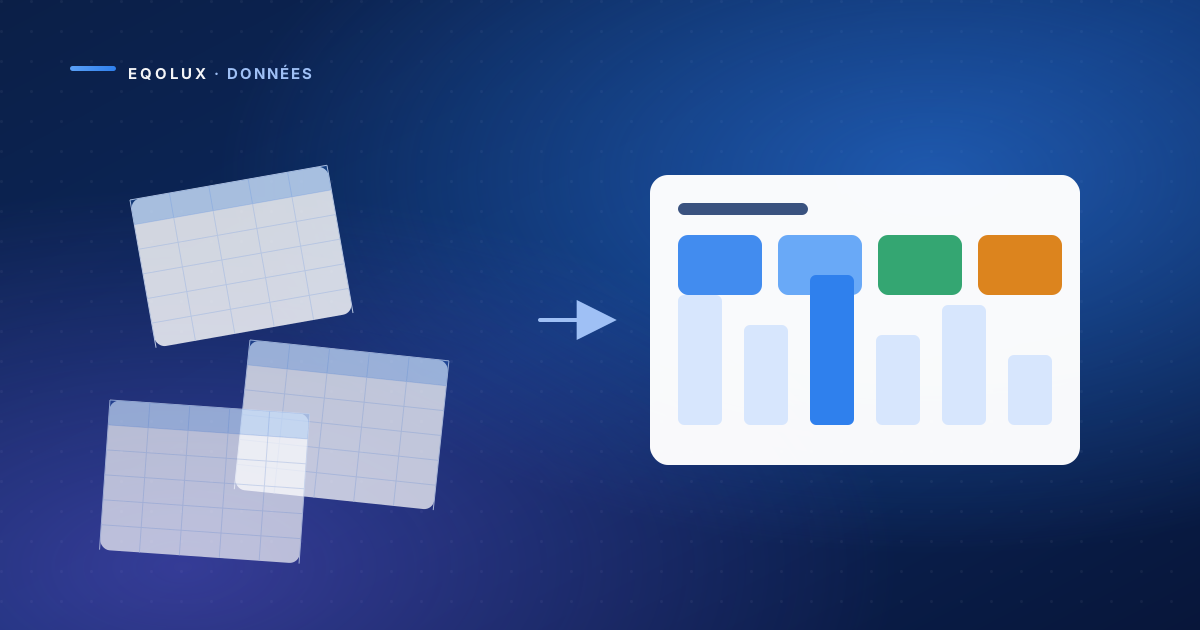
- Multi-site consolidation. Four sites send four files in four formats, and someone reconciles them by hand.
Across a mid-sized group, this routinely absorbs the equivalent of a full-time role — before a single price has been negotiated or a single increase challenged.
Why the cost compounds as you grow
Manual procurement does not scale linearly. Every new supplier introduces a new document format. Every additional site multiplies the reconciliation workload. Every currency adds a conversion step. Without a single source of truth, the work shifts from entering data to defending it — indefinitely.
The practical consequence: the people closest to your purchasing data have the least time to analyse it. Negotiation preparation, price reviews and supplier performance analysis are postponed, because the administrative baseline consumes the week.
Three moves that eliminate the low-value work
The answer is not working faster within a broken process — it is removing the process steps that should not exist:
- Automate document capture. Delivery notes and invoices are read automatically (OCR) on arrival. No retyping, no second entry for tracking.
- Automate reconciliation. Prices, quantities and totals are checked against your history and negotiated terms by rules — systematically, on every line.
- Consolidate by default. Every site, supplier and currency feeds one structured dataset, so group-level questions no longer require manual assembly.
Key takeaways
- The dominant cost of manual procurement is skilled time, not software or headcount.
- That cost compounds with every site, supplier and currency you add.
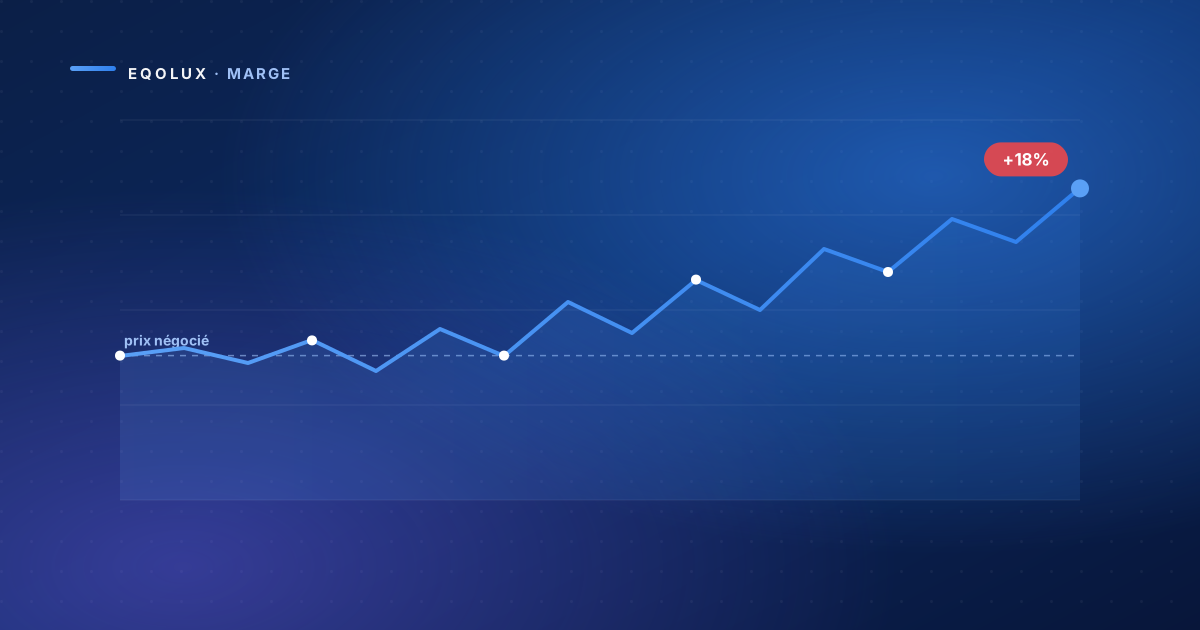
- Automating capture and reconciliation redirects that time toward negotiation and analysis — the work that actually moves margin.
Want to quantify the hidden hours in your own process? Talk to us and we will map it on your data.