
Every purchasing team starts with a spreadsheet, and for good reason. It’s fast, flexible and free. For a single kitchen with a handful of suppliers, it’s often all you need.
Then a second site opens. Then a third supplier changes its invoice format. Then someone pays in dollars. And the spreadsheet, without any dramatic failure, quietly stops telling the truth.
The moment it breaks
The break is rarely a crash. It’s a slow loss of trust in your own numbers:
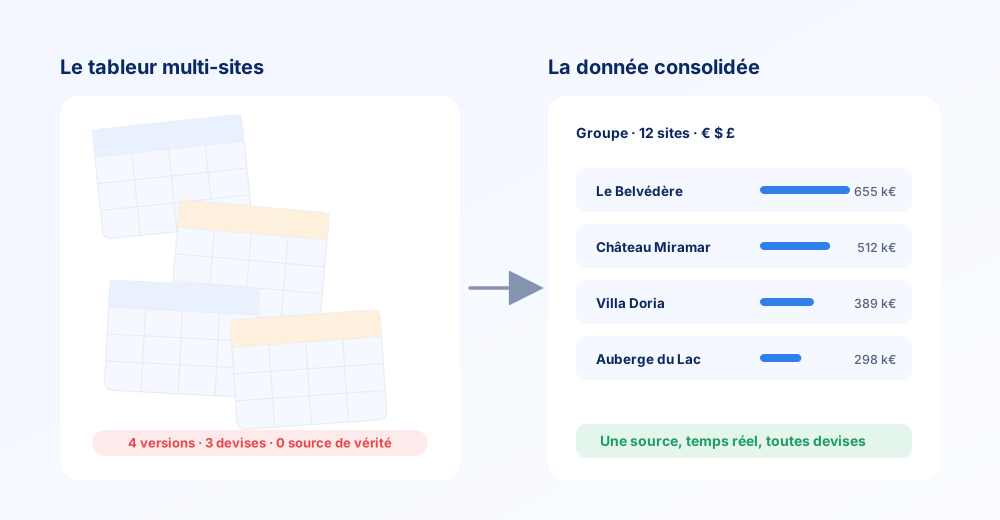
- Versions multiply. “Which file is current?” becomes a real question, with real consequences.
- Formats diverge. Each site fills the sheet a little differently, so totals stop being comparable.
- Currencies pile up. Amounts in €, $ and £ sit in the same column, converted by hand at a rate nobody wrote down.
- There is no source of truth. Four copies exist; none of them is definitively right.
At that point the spreadsheet isn’t saving you time — it’s generating work. Every question (“what did the group spend on beef last quarter?”) triggers an afternoon of copy-paste and a lingering doubt about whether the answer is right.
Why it can’t be fixed with more discipline
The instinct is to tighten process: a template, a naming convention, a shared drive. It helps for a month. But the underlying problem isn’t discipline — it’s that a spreadsheet has no concept of a supplier, a product or a contract. It stores cells, not meaning. Every rule about what those cells mean lives in someone’s head, and that person eventually goes on holiday.
What structured purchasing data does instead
Structured data treats a supplier as a supplier and a price as a price — across every site at once:
- One source of truth, updated in real time, for the whole group.
- Consolidation by default — every outlet rolls up automatically.
- A display currency you choose, with conversions handled for you.
- Saved, shareable views, so “the group beef report” is a link, not an afternoon.
Spreadsheets are wonderful. They’re just the wrong tool for the moment purchasing becomes plural.
Outgrown the spreadsheet? Talk to us — we’ll show you the consolidated view on your data.