Ask a purchasing manager how their week went and you’ll often hear a list of fires: an invoice that didn’t match, a supplier who over-charged, a report that took a day to build. Reactive work feels productive because it’s genuinely urgent. But a week spent putting out fires is a week nobody spent preventing them.
The difference between a reactive and a proactive purchasing function isn’t effort or talent. It’s whether the data works for you or against you.
The reactive loop
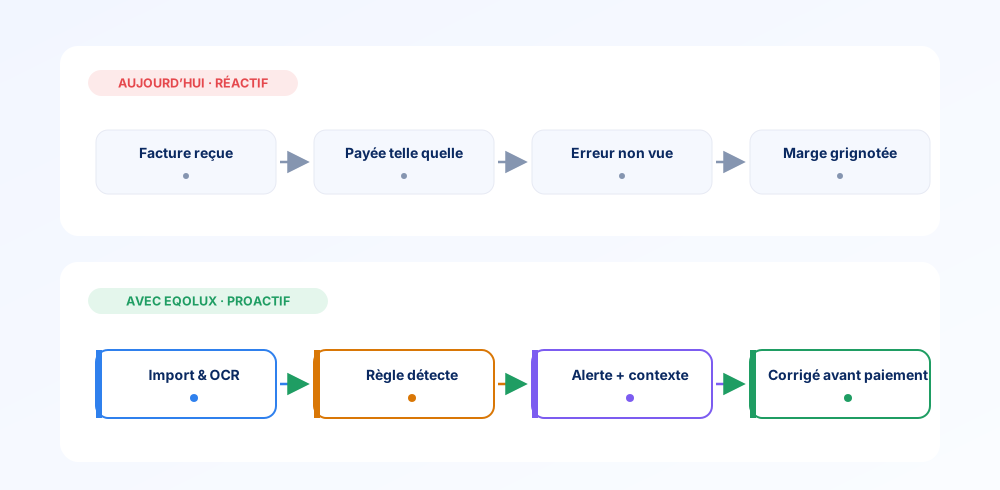
Without structured data, the sequence is fixed and always one step too late:
- the invoice arrives;
- it’s paid, more or less as-is, because checking every line by hand isn’t realistic;
- an error — if it’s ever noticed — is noticed weeks later;
- the margin is already gone, and recovering it means an awkward conversation and a credit note that may never come.
Every step happens after the money has moved. The best you can do is chase.
The proactive loop
Structured data doesn’t ask your team to be more vigilant. It moves the checkpoint earlier:
- documents are imported and read automatically as they arrive;
- rules compare each line to your contracts, your history and your negotiated prices;
- anything off — a price above the agreed rate, a missing discount, a duplicate, a drift — is flagged with context;
- it’s corrected before the invoice is paid, while you still hold all the leverage.
Same suppliers, same invoices, same team. The only thing that changed is when you find out.
Foresight is a byproduct, not a project
The quiet reward of getting ahead of the errors is that the same structured data answers the bigger questions almost for free: where spend is concentrated, which suppliers are drifting, what the group will pay next quarter if nothing changes. Dashboards, anomaly detection and an AI analyst that reads your data in plain language stop being a “someday” ambition and become the normal way of working.
You don’t get there by trying harder inside a broken process. You get there by structuring the data once, and letting it do the watching.
Ready to stop firefighting? Book a demo and see the proactive view on your own purchasing.