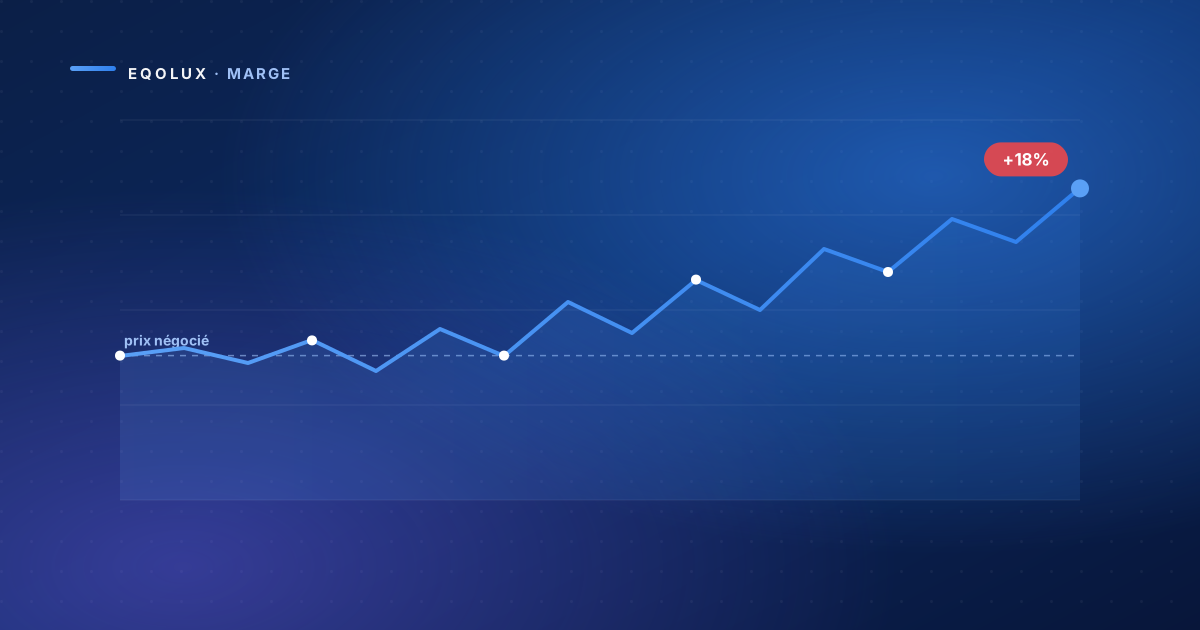

When people picture the cost of purchasing, they picture the invoices. The real cost is quieter and harder to see: the hours a team spends turning messy supplier documents into something they can actually use.
None of it appears on the P&L. All of it appears on someone’s calendar.
The work nobody put on a job description
Every week, in a typical multi-outlet operation, the same loop repeats:
- delivery notes and invoices are retyped — often twice, once to pay and once to track;
- prices are checked against last month’s, from memory or a scattered spreadsheet;
- a discrepancy is spotted, so someone emails the supplier and waits;
- four sites send four files in four formats, and someone stitches them together by hand.
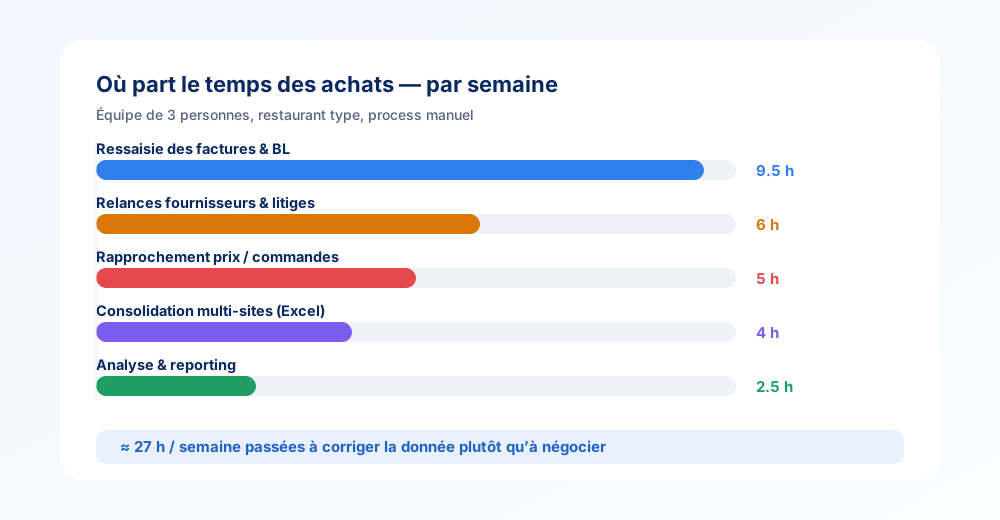
Add it up and a small team can lose the better part of a full-time role to data entry and reconciliation — before anyone has negotiated a single price or questioned a single increase.
Why it compounds
Manual purchasing doesn’t scale linearly, it scales painfully. Every new supplier is a new document format. Every new outlet multiplies the reconciliation. Every currency adds a conversion. The moment there is no single source of truth, the work is no longer entering data — it’s defending it, forever.
That is why the busiest people in purchasing are often the ones with the least time to do the part that creates value: looking at the numbers and acting on them.
The fix isn’t “work faster”
You cannot out-hustle a broken process. The way out is to stop doing the low-value work at all:
- Import once. Delivery notes and invoices are read automatically (OCR), not retyped.
- Reconcile automatically. Prices, quantities and totals are checked against your history and your contracts by rules, not by memory.
- Consolidate by default. Every outlet, every supplier, every currency in one place.
The hours you get back are not the point. The point is what your team does with them — negotiating, questioning, deciding — instead of transcribing.
Curious how many hours hide in your own process? Talk to us and we’ll show you on your data.